Those of high standing… a right recognized by Islamic law and affirmed by the legal system.
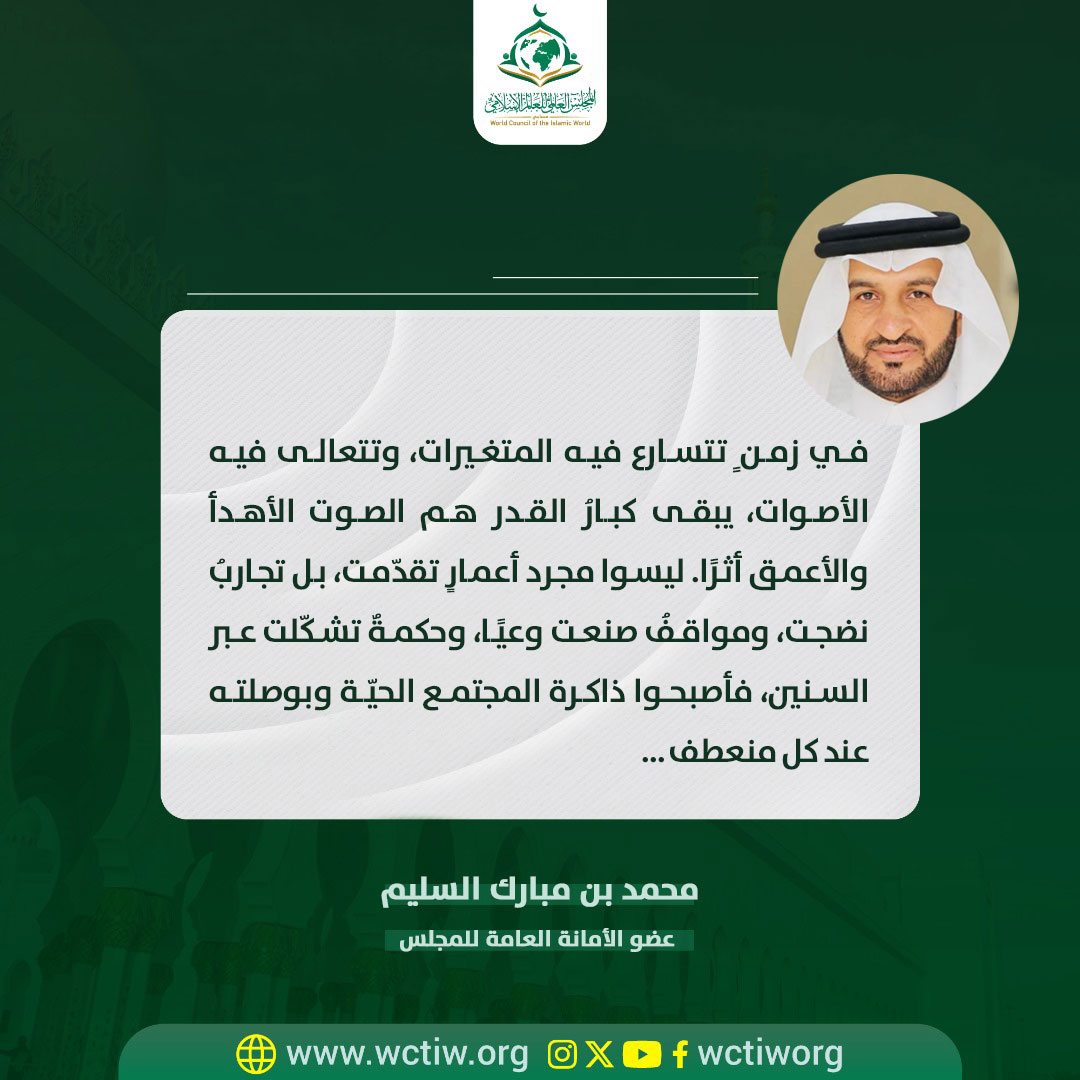
In a time of rapid change and rising voices, the voices of the elderly remain the quietest and most profound. They are not merely advanced years, but rather mature experiences, stances that have shaped awareness, and wisdom forged over the years, making them the living memory of society and its compass at every turn.
Islam came to elevate the status of the elderly, urging respect and reverence for them. The Prophet (peace and blessings be upon him) said: “He is not one of us who does not respect our elders and show mercy to our young.” Kindness and good treatment of parents are among the greatest acts of devotion, as God Almighty says:
“And say, ‘My Lord, have mercy upon them as they brought me up [when I was] small.’” (Quran 17:24)
Islamic law does not view the elderly merely as individuals in need of care, but as human and social values whose status must be preserved and whose worth must be protected.
It is noteworthy that the laws in the Kingdom of Saudi Arabia have affirmed this profound principle by safeguarding the rights of the elderly, preserving their dignity, and providing them with care and protection, stemming from the Islamic values upon which this blessed land was founded. When the system upholds the rights of the elderly, it embodies the Sharia’s earlier rulings on the obligation to respect and treat them kindly, and to refrain from mistreating or neglecting them.
Attending gatherings of esteemed elders is not merely a social courtesy, but rather a school that cultivates understanding and nourishes insight. In these gatherings, issues are discussed thoughtfully, and opinions are offered after deep consideration. Those who attend their company leave enriched with wisdom, balanced thinking, and a broader perspective.
Furthermore, seeking their counsel and advice is not a diminishment of the role of youth, but rather a complementary blend of enthusiasm and experience. Youth brings driving energy, while elders provide guidance, and when these two combine, sound decisions are born. How many crises have been averted by wise counsel, and how many disputes have been resolved by a well-considered word?
It is not without reason that societies have inherited the saying, “He who has no elder should find one,” for the experience of elders represents a safeguard, a wisdom that illuminates the path when matters become unclear, and grants families and communities greater balance and stability.
Societies that honor their elders, revive their councils, and involve them in decision-making are societies that know their way well and preserve their balance and identity.
For those of great stature are not merely a past to be recounted… but a present to be guided by, and a future built upon the light of their wisdom.
By:
A. Muhammad bin Mubarak Al-Saleem
Member of the General Secretariat of the World Council for the Muslim World (WCTIW)