At the conclusion of its proceedings, the Tashkent Declaration launches global initiatives to preserve Islamic heritage.
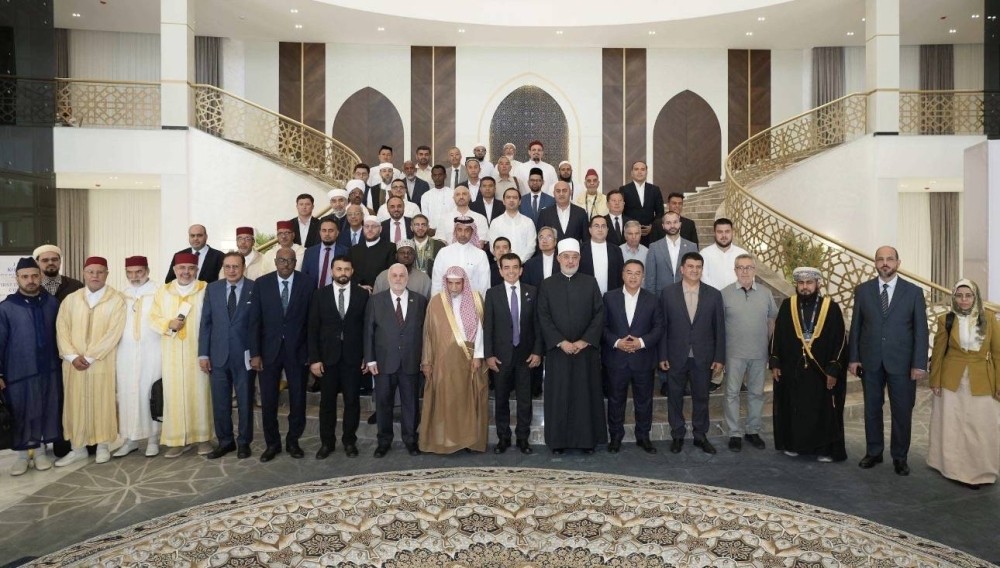
The declaration issued at the conclusion of the First International Islamic Forum in Tashkent emphasized the growing importance of the scholarly study of religious and cultural heritage to strengthen international trust and support sustainable development.
According to a press release, forum participants acknowledged the historical role of Uzbekistan and the wider Transoxiana region in shaping and developing Islamic and global civilization.
The First International Islamic Forum announced the launch of the First International Forum for Islamic Civilization’s Global Initiatives, aimed at establishing a new international framework for cooperation in the study, preservation, and promotion of Islamic cultural heritage.
These global initiatives include the establishment of the Global Alliance for Islamic Civilization, headquartered at the Center for Islamic Civilization in Uzbekistan. The Alliance will unite the efforts of international organizations, academic and scientific institutions, museums, libraries, archives, manuscript centers, research institutes, and other relevant entities.
The Global Alliance also aims to foster long-term international cooperation, implement joint scientific, educational, cultural, museum, and digital projects, facilitate the exchange of knowledge and best practices, and unify efforts to preserve, study, and promote the creative potential of Islamic civilization as a fundamental component of global cultural and intellectual heritage.
The participants also approved the Global Digital Register of Islamic Cultural Heritage initiative. This involves developing a unified international digital platform that brings together manuscripts, archival materials, museum collections, architectural monuments, intangible cultural heritage, and the results of scientific research.
The participants also approved the fourth initiative, the international program “Islamic Civilization: The Heritage of All Humanity,” which aims to facilitate the implementation of a comprehensive program of international exhibitions, educational projects, scientific conferences, publishing initiatives, and cultural events to highlight the contributions of Islamic civilization to science, culture, and education worldwide. The Tashkent Declaration also announced the launch of the International Prize for Islamic Civilization to recognize outstanding contributions to the study, preservation, and promotion of Islamic cultural heritage, as well as advancements in science, education, intercultural dialogue, and humanitarian cooperation.
Furthermore, the participants agreed to establish the International Foundation for Research on Islamic Civilization to support basic scientific research, the restoration of monuments, early-career research training, publishing initiatives, and the promotion of international academic cooperation.
The participants approved the establishment of a multilingual World Digital Library for Islamic Civilization, compiling manuscripts, scholarly works, archival documents, museum collections, educational resources, and digital exhibitions. They also agreed to create a multi-volume International Encyclopedia of Islamic Civilization dedicated to the history of Islamic civilization, prominent scholars, schools of thought, cultural landmarks, and significant achievements of the Islamic world. Furthermore, they agreed to prepare an annual international report on the state of Islamic cultural heritage.
This annual analytical report aims to assess the condition of heritage sites, the results of scientific research, current challenges, and prospects for international cooperation. The participants at the First International Islamic Forum also announced the convening of the International Youth Forum on Islamic Civilization, which will serve as a permanent platform for young researchers, students, and specialists in cultural heritage to nurture the next generation of experts in Islamic civilization. Finally, they decided to establish the International Federation of Museums of Islamic Culture, Arts, and Civilization, which will include leading museums, museum complexes, galleries, and specialized institutions from various countries.
The Union will also work to strengthen international cooperation among museums, organize joint exhibitions, conduct research, implement restoration, education, and digitization projects, facilitate the exchange of artifacts, best practices, and experts, and preserve, study, and promote the rich heritage of Islamic culture, arts, and civilization.
The Tashkent Declaration announced the election of the Forum’s International Council at the first session of the International Forum on Islamic Civilization, and its establishment as a permanent coordinating body. This Council is tasked with summarizing all initiatives and proposals submitted by Forum participants, developing and adopting an international roadmap for joint action until 2030 based on this input, and presenting the roadmap to all Forum participants, international organizations, and the Government of the Republic of Uzbekistan as a practical mechanism for implementing this Declaration.