International Conference on Jerusalem Held in Cairo Under the Auspices of the Organization of Islamic Cooperation and the United Nations
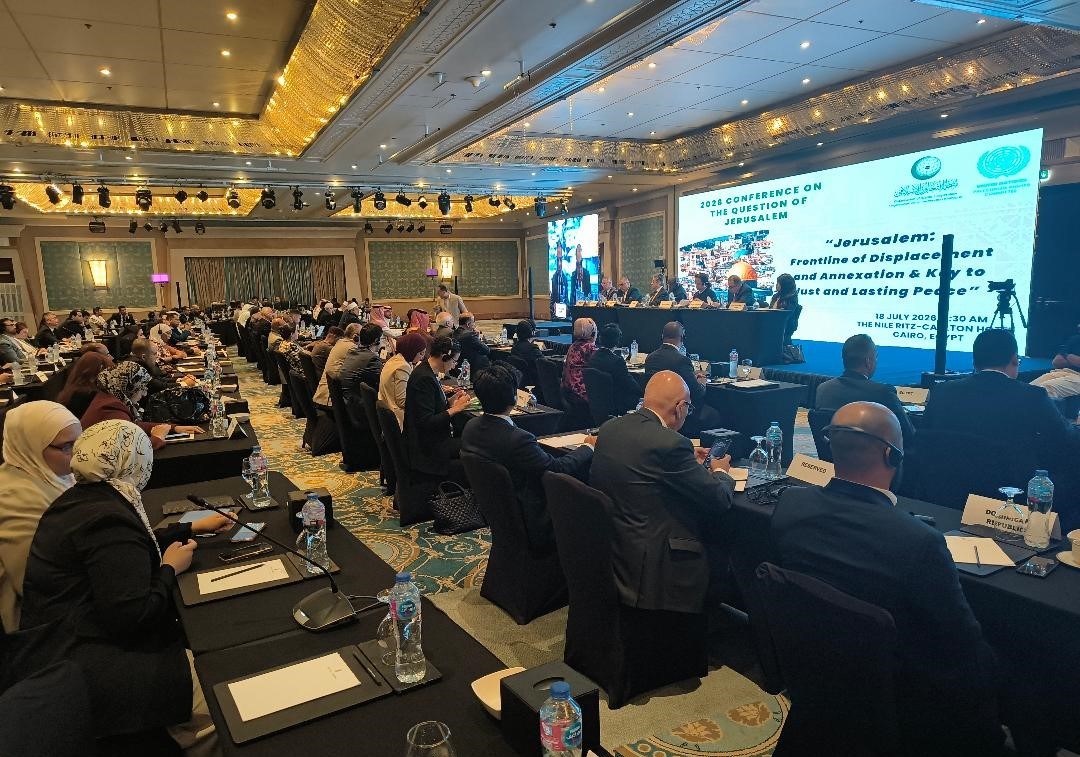
The International Conference on Jerusalem commenced in Cairo, Egypt, on Friday, July 17, 2026. Held jointly by the Organization of Islamic Cooperation (OIC) and the United Nations, the conference theme was: “Jerusalem: The Front Line of Displacement and Annexation, and the Key to Achieving a Just and Lasting Peace.”
At the outset of the conference, Ambassador Dr. Dawas Dawas, Assistant Secretary-General for Palestine and Jerusalem Affairs, delivered a speech on behalf of the Secretary-General of the OIC. In his address, he emphasized the central and pivotal status of Jerusalem as the capital of the State of Palestine and an integral part of the Palestinian territory occupied since 1967.
Dawas noted that Israel, as the occupying power, continues to implement systematic policies and measures aimed at altering the historical, legal, and demographic character of the Holy City. These policies include settlement expansion, land confiscation, house demolitions, and the undermining of the Palestinian presence, as well as the complete isolation of the city from its surrounding areas in the West Bank. This constitutes a flagrant violation of international law and resolutions of international legitimacy.
He also warned of the escalating and blatant attacks on Islamic and Christian holy sites, particularly the Al-Aqsa Mosque, through repeated incursions by settlers under the protection of the occupation forces, the imposition of unjust restrictions on worshippers and freedom of worship, and the continuation of dangerous excavations around the mosque and the Old City. These actions constitute a violation of the existing historical and legal status quo and an act of vandalism against the city’s cultural and human heritage.
The ambassador emphasized that all Israeli positions, decisions, and measures aimed at erasing the Palestinian identity of Jerusalem or falsifying its geographical and demographic reality, in addition to attempts to undermine the legal and historical status of holy sites, especially the Al-Aqsa Mosque, are null and void and do not confer any rights under international law.
Ambassador Dawas also addressed the seriousness of the escalating Israeli attacks throughout the West Bank through aggressive settlement plans, forced displacement, and annexation policies, along with the deliberate destruction of infrastructure in Palestinian refugee camps. He called on the international community to exert real and immediate pressure on the Israeli occupation to halt these violations without delay. In the same vein, Dawas called on the international community to take practical and effective steps toward achieving a two-state solution, including the official recognition of the State of Palestine and support for its full membership in the United Nations, ensuring respect for the rules of international law and international humanitarian law, and working diligently to implement relevant UN resolutions to end the occupation and halt all unilateral measures that undermine the prospects for peace, most notably settlement activity, annexation, land confiscation, and attempts to alter the legal and historical status of Jerusalem.
The conference witnessed high-level participation, including the Minister of Jerusalem Affairs of the State of Palestine, Ashraf Al-Awar; Ambassador Mahmoud Omar, Assistant Minister of Foreign Affairs of the Arab Republic of Egypt; Ambassador Coly Seck, Chair of the UN Committee on the Exercise of the Inalienable Rights of the Palestinian People; Ambassador Riyad Mansour, Permanent Observer of the State of Palestine to the United Nations; and the Assistant Secretary-General of the League of Arab States and Head of the Palestine and Occupied Arab Territories Sector.
The conference was also attended by a host of state representatives and members of the diplomatic corps, as well as a distinguished group of religious figures, academics, intellectuals, researchers, and experts specializing in Jerusalem and the Palestinian cause. These participants enriched the conference sessions with insightful interventions and discussions addressing the political, legal, historical, and cultural dimensions of the Holy City. They explored ways to strengthen international efforts to protect its identity, counter policies of displacement and annexation, and support the resilience of the Palestinian people, ultimately contributing to the achievement of a just, comprehensive, and lasting peace firmly grounded in international law.
It is worth noting that this conference is held annually as part of the Organization of Islamic Cooperation’s (OIC) international coordination and cooperation mechanisms with various international organizations, most notably the United Nations. Its purpose is to continuously highlight the city of Jerusalem as the heart of the Palestinian cause and the central issue that remains at the forefront of the OIC’s priorities.
Source: UNA