Family development in Islam: a civilizational and strategic project
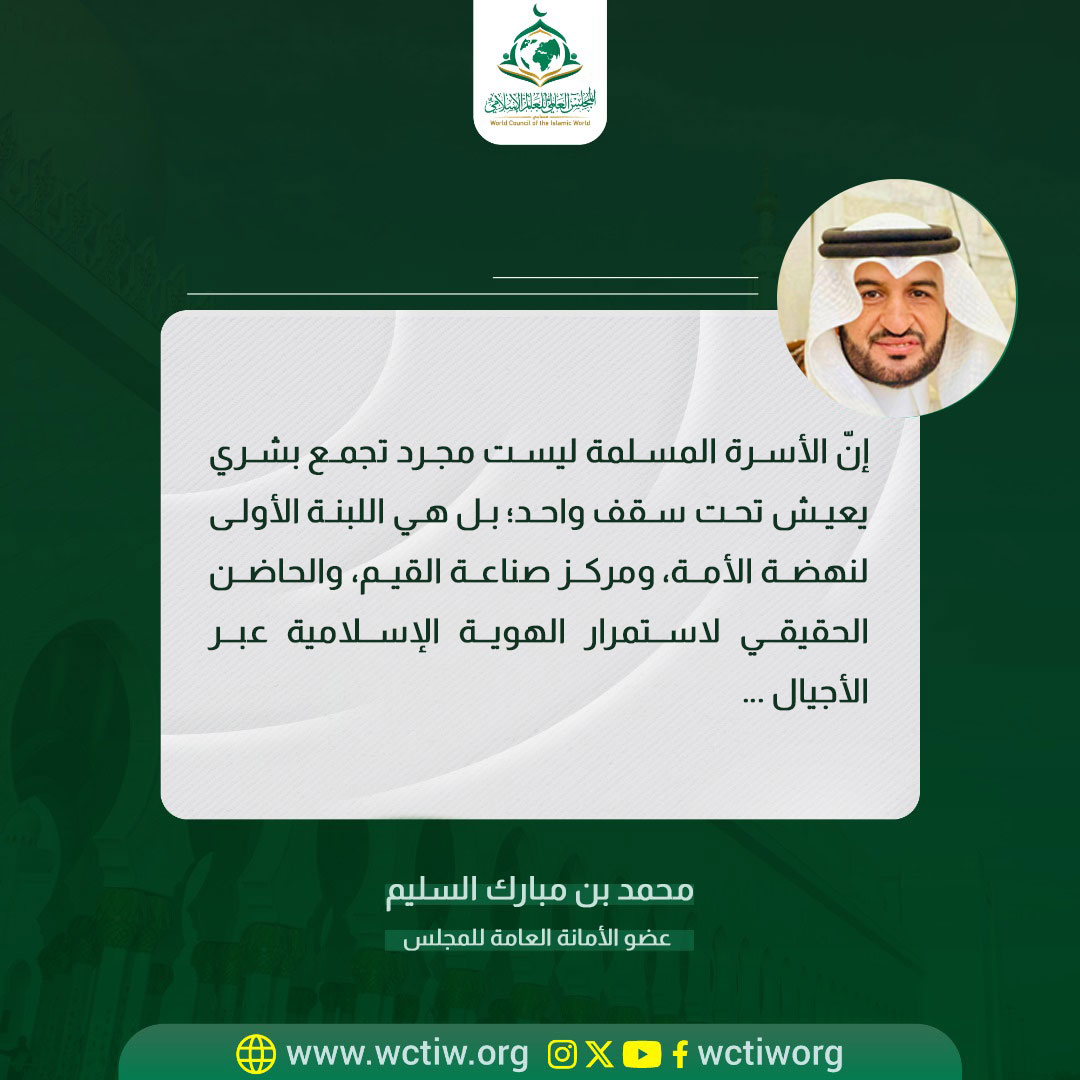
The Muslim family is not merely a human gathering living under one roof; rather, it is the cornerstone of the nation’s revival, the center of value formation, and the true guardian of the continuity of Islamic identity across generations. For this reason, the Quranic guidance is clear in the words of God Almighty:
“O you who have believed, protect yourselves and your families from a Fire” (Quran 66:6). This is a command to protect and fortify the family through upbringing, awareness, and faith, for it is the nucleus of society and its foremost responsibility.
Therefore, the stability of the family in Islam is a civilizational endeavor no less important than the building of institutions and states; the well-being of the home is the foundation of the well-being of the entire society.
The development of the family—scientifically, educationally, and intellectually—is not an isolated social task, but a strategic project whose impact is reflected in the strength, security, and stability of the nation. This is what the Prophet Muhammad (peace and blessings be upon him) alluded to when he said, “Each of you is a shepherd, and each of you will be asked about his flock.” He thus established the family as the arena for education and leadership, and the center for raising generations that will bear the responsibility and uplift the nation.
When a family fortifies its children with values and provides them with a safe emotional and intellectual environment, it builds individuals capable of contributing to the development of their homeland and facing the challenges of their time with steadfastness and awareness.
A strong family produces a strong citizen, a stable family produces a stable society, and a conscious family produces a nation that knows its path toward progress.
Therefore, caring for the family is not merely a limited educational matter, but a long-term civilizational investment that preserves the identity of Muslims and cultivates generations capable of serving their religion and their nation with confidence and effectiveness.